Short answer
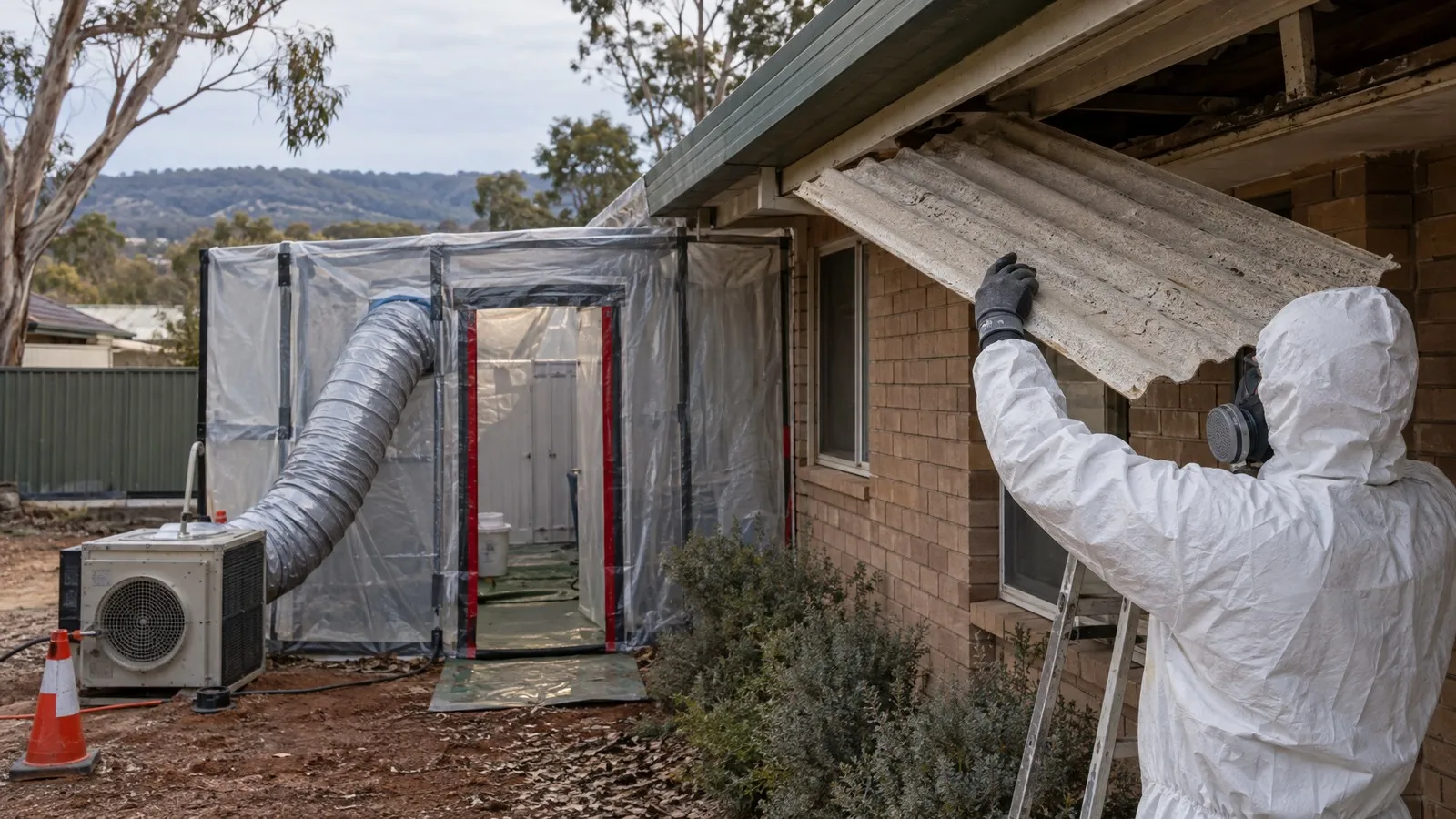
In Queensland, any amount of friable asbestos needs a Class A licensed removalist. More than 10 m² of non-friable asbestos needs a Class A or Class B licence, and 10 m² or less needs no licence. Class A covers all Class B work, and friable jobs need a supervisor on site, independent air monitoring and a licensed assessor's clearance.
In this guide
- Which licence does your job need?
- Friable vs non-friable asbestos
- What each licence allows
- The 10 m² rule
- Supervision: the biggest practical difference
- Control plans and notifying WorkSafe Queensland
- Air monitoring and clearance
- Class A vs Class B: side-by-side comparison
- What this means if you commission the work
- How to check a removalist's licence
- Frequently asked questions
- Sources
If you manage buildings or run construction jobs, you are usually the person who “commissions” asbestos removal. Under Queensland's Work Health and Safety Regulation 2011, that gives you legal duties of your own: hire the right licence class, arrange independent air monitoring and clearance, and share the results. This guide sets out what each licence allows, the 10 m² rule, supervision, notification, monitoring and clearance, with the section of the Regulation behind each rule.
Which licence does your job need?
| What is being removed | Amount | Licence needed | Common examples |
|---|---|---|---|
| Friable asbestos | Any amount | Class A | Pipe lagging, sprayed insulation, low density board (LDB) ceilings, crumbling or fire-damaged sheeting |
| Asbestos-contaminated dust or debris (ACD) | Any amount | Class A, with two exceptions | Dust in ceiling spaces, debris after a fire or storm |
| Non-friable (bonded) asbestos | More than 10 m² | Class A or Class B | Fibro walls and eaves, asbestos cement roofs, vinyl floor tiles |
| Non-friable (bonded) asbestos | 10 m² or less | No licence, but a trained competent person | A small section of fibro, a meter board, a short length of fence |
The two ACD exceptions are dust and debris from removing more than 10 m² of non-friable asbestos, which a Class B licence covers, and minor contamination that isn't linked to a removal job.
Friable vs non-friable asbestos
The Regulation defines friable asbestos as material that is in powder form, or can be crumbled, pulverised or reduced to powder by hand pressure when dry, and that contains asbestos. Everything else containing asbestos is non-friable, also called bonded. In bonded material, the fibres are locked into cement, vinyl or resin.
The test is about the material's condition, not just its type. Bonded sheeting that has been weathered, burnt or broken up until it crumbles by hand meets the friable definition and needs Class A removal.
Low density board is now friable
Low density board (LDB), also called asbestos insulating board, was made from the 1950s to the 1970s. It was used for walls, ceilings and acoustic tiles, including in many schools. It looks like ordinary fibro but is softer and dents easily. Since May 2021, Queensland law classes LDB as friable in all circumstances. Any LDB removal therefore needs a Class A licence, however good its condition. If a building has 1950s–1970s ceilings, have them tested before you scope the job as Class B.
What each licence allows
- Class A licence (s 485): authorises removal of friable asbestos and ACD, and also all Class B work. The Regulation defines a Class A licence as authorising both Class A and Class B asbestos removal work.
- Class B licence (s 487): authorises removal of more than 10 m² of non-friable asbestos, and the ACD associated with that removal. It does not authorise any friable work.
A Class A holder doesn't need a separate Class B licence. A contractor listed only on the Class A register can legally do bonded work. On mixed jobs, such as a building with both fibro walls and LDB ceilings, a Class A contractor can do everything under one licence and one program.
The 10 m² rule
Under section 458, a business that commissions asbestos removal must use a removalist licensed for that work. There is one exception: 10 m² or less of non-friable asbestos, with its associated dust and debris. For that amount, no licence is required, but the work must be done by a competent person trained under section 445 of the Regulation. The 10 m² exception never applies to friable asbestos.
For facility managers, this means a maintenance contractor can lawfully remove a small section of bonded sheeting if they are trained and follow the Regulation. Anything larger, any friable material and any LDB needs a licensed removalist.
Supervision: the biggest practical difference
Class A: a nominated supervisor, on site the whole time
Class A work must be supervised by a nominated supervisor named in the licence (s 529). To be named, a supervisor must:
- be at least 18 years old
- hold certification in the specified VET course for supervising asbestos removal
- have at least 3 years of relevant industry experience (s 493).
A Class A applicant must also show it has a certified safety management system in place. The supervisor must be present at the asbestos removal area whenever Class A work is being carried out (s 459).
Class B: a qualified supervisor, readily available
When Class B work is done by more than one person, it must be supervised by someone the licence holder is satisfied is at least 18, holds the Class A or Class B removal certification, and has at least 1 year of relevant experience (s 529). That supervisor must be readily available to the workers whenever the work is being carried out, but doesn't have to stay in the removal area (s 459).
Workers
Every worker doing licensed removal must hold certification in the VET course for that class of work. They must also receive site-specific training on the asbestos removal control plan (s 460).
Control plans and notifying WorkSafe Queensland
For any licensed removal, Class A or B, the removalist must prepare an asbestos removal control plan (s 464). The plan sets out the method, tools, equipment and PPE, and the location, type and condition of the asbestos. The removalist must give a copy to the person who commissioned the work.
The removalist must also give Workplace Health and Safety Queensland written notice at least 5 days before licensed removal starts (s 466). The notice includes the removalist's licence number. Work can start immediately only after a sudden and unexpected event that may expose people to asbestos fibres, or an unexpected breakdown of an essential service. In those cases the regulator must be told by phone straight away and in writing within 24 hours. Build the five days into your program.
Air monitoring and clearance
Air monitoring
For Class A work, the business that commissions the removal must ensure an independent licensed asbestos assessor carries out air monitoring (s 475). Monitoring runs immediately before removal starts, unless glove bags are used, and throughout the work. The results must be given to workers, health and safety representatives and others at the workplace. On domestic premises, the duty sits with the removalist instead.
If monitoring records 0.01 fibres/mL or more, the removalist must investigate and put controls in place. Above 0.02 fibres/mL, work must stop and the regulator must be notified (s 476). For Class B work, air monitoring is not mandatory under s 475, but it can be specified, and often is in occupied buildings.
Clearance inspection and certificate
When licensed removal finishes, the person who commissioned it must ensure a clearance inspection is carried out (s 473):
- for Class A work, by an independent licensed asbestos assessor
- for Class B work, by an independent competent person.
The area can't be reoccupied until a clearance certificate is issued (s 474). It can only be issued if the area and its surroundings are free from visible asbestos contamination, and any air monitoring shows asbestos below 0.01 fibres/mL. The removalist cannot clear its own work unless the regulator grants an exemption.
Class A vs Class B: side-by-side comparison
| Requirement | Class A | Class B |
|---|---|---|
| Friable asbestos | Yes, any amount | No |
| Non-friable over 10 m² | Yes | Yes |
| Asbestos-contaminated dust and debris | Yes | Only from its own non-friable removal |
| Supervisor | Nominated supervisor named in the licence | Qualified supervisor, if more than one worker |
| Supervisor experience | At least 3 years | At least 1 year |
| Supervisor on site | Present whenever work is under way | Readily available |
| Certified safety management system | Required to obtain the licence | Not required |
| Asbestos removal control plan | Required | Required |
| 5-day notice to WHSQ | Required | Required |
| Air monitoring | Mandatory, by an independent licensed assessor | Optional |
| Clearance inspection by | Independent licensed asbestos assessor | Independent competent person |
| Clearance certificate before reoccupation | Required | Required |
What this means if you commission the work
Facility managers, head contractors and asset owners carry duties of their own when they commission removal at a workplace:
- Match the licence to the material. Check the asbestos register or test results. If anything is friable, including LDB, you need Class A (s 458).
- Check the licence is current. WorkSafe Queensland publishes its Class A and Class B registers, with licence numbers and expiry dates.
- Engage the independent assessor. For Class A work, arrange air monitoring and clearance by a licensed assessor who is independent of the removalist (ss 473, 475).
- Share the results. Give air monitoring results to workers and others at the workplace (s 475).
- Keep the paperwork. The control plan, the WHSQ notification, monitoring results and the clearance certificate are your evidence the job was done lawfully.
How to check a removalist's licence
WorkSafe Queensland publishes downloadable registers of current Class A and Class B licence holders, with each holder's legal name, licence number, region and expiry date. Ask every removalist for their licence number and check it against the register before awarding work.
Burke Industries is on the Class A register as licence 2302383, current to 19 December 2028. That means our Class A asbestos removal crews in Toowoomba can take on friable and bonded work under one licence. Our full licence details are on our licences and compliance page.
Frequently asked questions
Can a Class A removalist do Class B work?
Yes. Under the Queensland Work Health and Safety Regulation 2011, a Class A licence authorises both Class A and Class B asbestos removal work. A contractor that appears only on the Class A register can legally remove bonded asbestos over 10 m² as well as friable asbestos.
Is low density board (LDB) Class A or Class B work?
Class A. Since May 2021, Queensland has classed low density asbestos fibre board as friable in all circumstances, so removing it needs a Class A licence, a nominated supervisor on site, independent air monitoring and clearance by a licensed asbestos assessor.
Do I need a licence to remove less than 10 m² of asbestos?
Not for non-friable (bonded) asbestos. Up to 10 m² can be removed by a competent person trained under the Regulation, without a licence. Any amount of friable asbestos needs a Class A licensed removalist.
Who arranges air monitoring and the clearance certificate?
At a workplace, the business that commissions the removal must ensure the clearance inspection is done. For Class A work, it must also ensure an independent licensed asbestos assessor carries out air monitoring. On domestic premises, these duties sit with the licensed removalist.
How much notice does WorkSafe Queensland need before asbestos removal?
At least 5 days' written notice before licensed removal starts, for both Class A and Class B work. Work can start immediately only after a sudden, unexpected event or an essential service breakdown, with phone notice straight away and written notice within 24 hours.
How do I check if an asbestos removalist is licensed?
WorkSafe Queensland publishes registers of current Class A and Class B licence holders, listing each business's legal name, licence number and expiry date. Ask for the licence number and check it against the register before awarding work.
Can the removalist issue its own clearance certificate?
No. The clearance inspection must be done by someone independent: a licensed asbestos assessor for Class A work, or an independent competent person for Class B work. An exemption is possible only if the regulator grants one.
Get a site assessment for your asbestos licence class
Send us your asbestos register or test results and the areas involved. We'll confirm whether the work is Class A or Class B, including any LDB, and quote the removal, WHSQ notification, monitoring and clearance for that exact scope.
Book a site assessmentOr see our friable and bonded asbestos removal service in Toowoomba.
Sources
- Work Health and Safety Regulation 2011 (Qld). (current text, read 6 Oct 2026): s 445 (training), s 458 (licensed removalist and the 10 m² exception), s 459 (supervisor present or readily available), s 460 (worker training), s 464 (control plan), s 466 (5-day notice), ss 473–474 (clearance, 0.01 fibres/mL), s 475 (air monitoring), s 476 (0.01 and 0.02 fibres/mL action levels), s 485 (Class A), s 487 (Class B), s 493 (Class A application: supervisors 18+, VET, 3 years, certified safety management system), s 529 (supervision; Class B supervisor 1 year), Sch 19 (definitions of friable asbestos and of the Class A licence).
- WorkSafe Queensland: which businesses are licensed to remove asbestos in Queensland. : licence classes and the Class A/B registers. Burke Industries Pty Ltd is on the Class A register as licence 2302383, expiry 19 Dec 2028 (register dated 25 Sep 2026).
- WorkSafe Queensland: asbestos notifications
- WorkSafe Queensland: asbestos and demolition
- Asbestos and Silica Safety and Eradication Agency: LDB product guide. : friable in all circumstances under Queensland law since May 2021; made 1950s–1970s; used in school ceilings.