Short answer
In Queensland, licensed asbestos removal ends with a clearance inspection and a written clearance certificate before the area is reoccupied. For Class A (friable) work, an independent licensed asbestos assessor must monitor the air and issue it. For Class B work, an independent competent person issues it. Any air readings must be below 0.01 fibres/mL.
In this guide
- When is a clearance certificate required?
- Who can issue a clearance certificate?
- What happens at the clearance inspection
- Air monitoring explained
- What you should receive at handover
- Red flags at handover
- If a clearance turns out to be wrong
- How we handle clearance on Burke jobs
- Frequently asked questions
- Sources
The clearance certificate is the document that says an area is safe to use again after asbestos removal. For government and commercial clients, it is also the evidence that the job was done lawfully. This guide sets out when clearance is required, who can issue it, what air monitoring involves, the documents you should receive at handover, and the red flags to look for. It is based on the Work Health and Safety Regulation 2011 (Qld) and WorkSafe Queensland's How to safely remove asbestos Code of Practice 2021.
When is a clearance certificate required?
A clearance inspection is required when licensed asbestos removal work is completed at a workplace (s 473). That means all Class A work and Class B work over 10 m². The inspection must be carried out before the area is used again, and the certificate must be issued before the asbestos removal area can be reoccupied (s 474).
- Who arranges it. At a workplace, the business that commissioned the removal, usually the owner, agency or head contractor. On domestic premises, the licensed removalist (s 473).
- Before other work resumes. The Code of Practice says a clearance certificate must be issued before the area is reoccupied for demolition or other work. Barricades should stay up until the final clearance certificate is issued.
- Small, unlicensed jobs. Removing 10 m² or less of non-friable asbestos isn't licensed work, so s 473 doesn't apply. The work must still be done by a trained competent person.
Who can issue a clearance certificate?
| Removal work | Clearance inspection and certificate by | Air monitoring |
|---|---|---|
| Class A (friable asbestos, including low density board) | An independent licensed asbestos assessor | Mandatory, by an independent licensed asbestos assessor |
| Class B (more than 10 m² of non-friable asbestos) | An independent competent person | Optional; may be done by an independent licensed assessor or competent person |
| 10 m² or less of non-friable asbestos (unlicensed) | No statutory clearance under s 473 | Not required |
What “independent” means
Schedule 19 of the Regulation defines it. A competent person doing a clearance inspection must not have been involved in removing the asbestos being inspected. For other clearance and air monitoring work, the person must not be involved in the removal or in any business involved in the removal. In practice, the assessor should be separately engaged, not an employee or related company of the removalist. If independence genuinely isn't reasonably practicable, for example at a remote site, an exemption can be sought from the regulator. Without one, the removalist can't clear its own work (s 473(4)).
What happens at the clearance inspection
A clearance inspection verifies that the area is safe for normal use. It must include a visual inspection and may include air monitoring (s 473(3)). The assessor or competent person must not issue a certificate unless satisfied (s 474(4)) that:
- the asbestos removal area and the area immediately around it are free from visible asbestos contamination
- if air monitoring was part of the inspection, it shows asbestos below 0.01 fibres/mL.
The certificate must be in writing. It must state that no visible asbestos residue from the removal work was found in or near the area. Where air monitoring was done, it must also state that the airborne asbestos fibre level was less than 0.01 fibres/mL (s 474(5)). A certificate that doesn't say both of these things, where monitoring was done, doesn't meet the Regulation.
Air monitoring explained
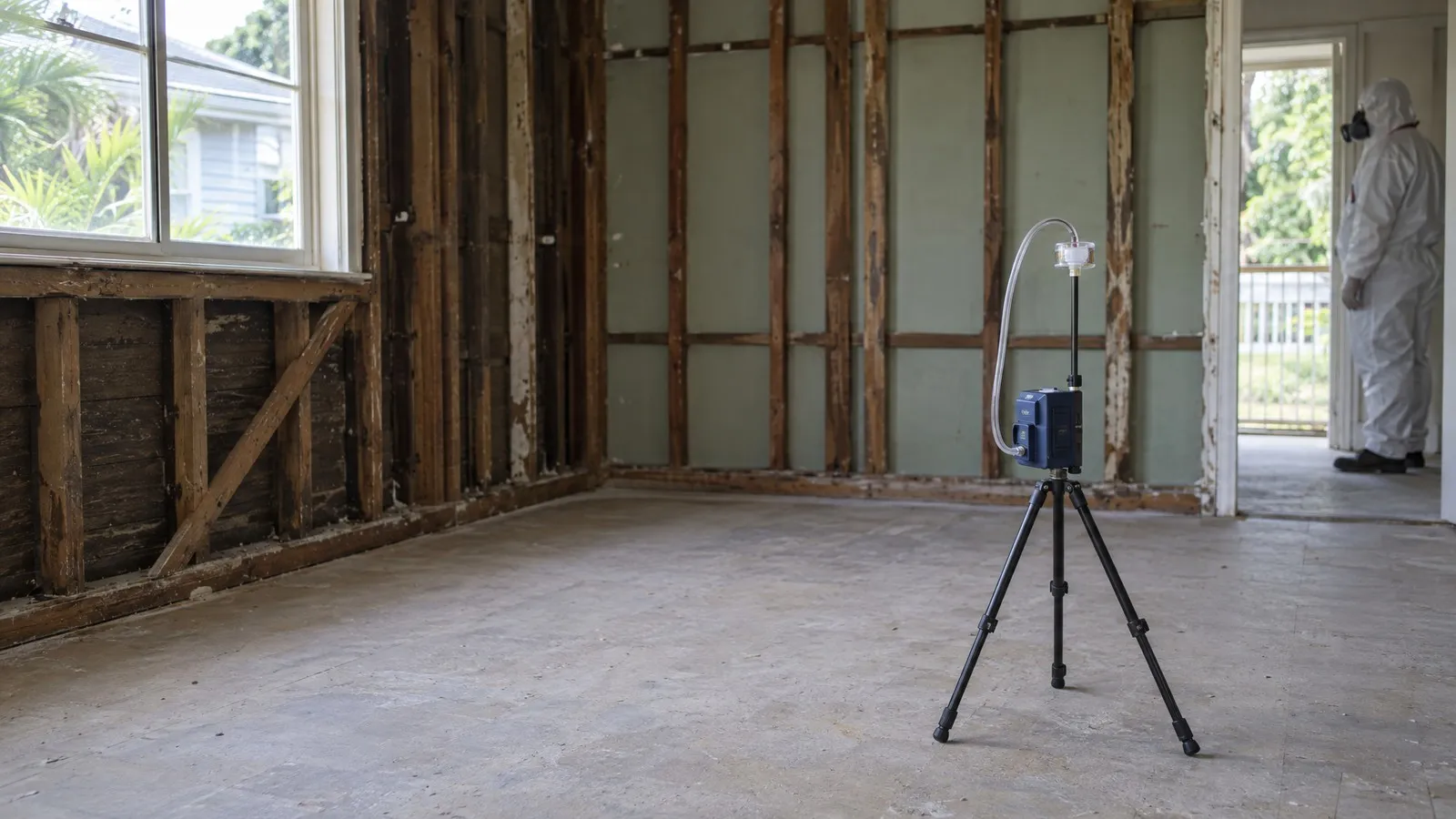
Air monitoring measures respirable asbestos fibres in the air. The Code of Practice describes two kinds:
- Control monitoring samples the air around the removal area to check the controls are working.
- Exposure monitoring samples a worker's breathing zone to measure their exposure.
Both must be done using the membrane filter method set out in the national guidance note NOHSC:3003 (2005).
When it's required
- Friable (Class A) removal. Control monitoring is mandatory. The commissioning business must ensure an independent licensed asbestos assessor monitors the air immediately before removal starts (unless glove bags are used) and during the work, at times the assessor decides (ss 475, 477). It is also required before an enclosure is dismantled and as part of the clearance inspection.
- Non-friable (Class B) removal. Not mandatory, but it can be done to confirm controls are working. The Code of Practice says it should be considered next to public areas. It may also be needed where controls are in doubt, dust is found outside the work area, methods change, or there has been an uncontrolled disturbance.
Action levels
| Respirable fibre level | Required action |
|---|---|
| Below 0.01 fibres/mL | Continue with existing controls |
| 0.01 to 0.02 fibres/mL | Review controls, investigate the cause, and implement controls to prevent further release |
| Above 0.02 fibres/mL | Stop removal work, notify the regulator, investigate, and fix the controls before restarting |
For Class A work, the commissioning business must make sure monitoring results are given to workers, health and safety representatives, other businesses at the workplace and anyone else there (s 475(4)). Where exposure monitoring is done, the Code of Practice says results must be kept for 30 years.
Friable removal controls you should see
Under s 477, friable removal must, so far as reasonably practicable, use:
- an enclosure that has been tested for leaks
- negative pressure (unless glove bags are used)
- the wet method of removal.
The removalist must not dismantle the enclosure until air monitoring shows a respirable fibre level inside it below 0.01 fibres/mL. Outside domestic premises, those results come from the person who commissioned the work.
What you should receive at handover
For a licensed removal job, a complete handover pack lets you update your asbestos register and prove compliance if you're ever asked. Expect:
| Document | Why you need it | Basis |
|---|---|---|
| Asbestos removal control plan | Shows the method, equipment, and the location, type and condition of the asbestos removed. The removalist must give you a copy. | s 464 |
| Licence details | The removalist's licence class and number, which you can check on WorkSafe Queensland's register | ss 458, 485, 487 |
| Notification to WorkSafe Queensland | Evidence that 5 days' written notice was given before licensed removal started | s 466 |
| Air monitoring results (Class A) | Background, during-removal and pre-dismantling results from the independent licensed assessor | ss 475, 477 |
| Clearance certificate | Written confirmation of no visible residue and, where monitored, fibres below 0.01 fibres/mL, signed by the independent assessor or competent person | s 474 |
| Waste disposal records | Evidence the waste was contained, labelled and disposed of at a site authorised to accept asbestos waste | s 472 |
| Updated asbestos register entry | Your own duty: the register must be reviewed when asbestos is removed | s 426 |
On our licensed jobs, Burke Industries' asbestos documentation includes the asbestos removal control plan, air monitoring results, waste tracking records and the clearance certificate.
Red flags at handover
- The removalist cleared its own work. Clearance by the removalist's staff or a related company isn't independent, unless the regulator has granted an exemption.
- A Class A job cleared by a “competent person”. Friable work needs a licensed asbestos assessor for clearance and air monitoring.
- No air monitoring on friable work, or monitoring that started after removal began.
- The enclosure came down before results were in. Results showing less than 0.01 fibres/mL inside the enclosure are required first.
- A certificate that doesn't state the required findings: no visible residue and, where monitored, a fibre level below 0.01 fibres/mL.
- The area was reoccupied, or other trades started, before the certificate was issued.
- No control plan, no notification, or a licence number that isn't on the register for the right class.
- Vague answers about disposal. Commercial asbestos isn't accepted at Toowoomba Regional Council's waste facility, so ask where it went.
If a clearance turns out to be wrong
Queensland has a specific rule for this. Section 474A applies where a competent person issued a clearance certificate but the area wasn't actually free from visible asbestos, and a WorkSafe inspector then issues an improvement or prohibition notice to the removalist. The removalist must have a new clearance inspection done by a different independent competent person, one with no involvement in the original work or the businesses involved. The removalist cannot recover the cost of the rework or the new inspection from the owner or occupier.
How we handle clearance on Burke jobs
Burke Industries holds WorkSafe Queensland Class A asbestos removal licence 2302383, which covers friable and non-friable work. On every licensed job we prepare the control plan, give WorkSafe Queensland five days' notice, and work with the independent assessor on monitoring and clearance. You get the documentation set out above at handover. You can check our licence numbers on our licences and compliance page, and see how we scope removal on our asbestos removal page for Toowoomba and the Darling Downs.
Frequently asked questions
Who can issue an asbestos clearance certificate in Queensland?
For Class A (friable) removal, only an independent licensed asbestos assessor. For Class B removal of more than 10 m² of non-friable asbestos, an independent competent person. The removalist can't clear its own work unless the regulator grants an exemption.
Is a clearance certificate required for every asbestos job?
It is required for all licensed asbestos removal work, which covers all friable removal and non-friable removal over 10 m². Removing 10 m² or less of non-friable asbestos is unlicensed work, so the statutory clearance requirement doesn't apply.
What fibre level is needed for clearance?
The area and its immediate surroundings must be free from visible asbestos contamination. If air monitoring is done as part of the clearance inspection, it must show respirable asbestos fibres below 0.01 fibres/mL.
Is air monitoring mandatory for asbestos removal?
For friable (Class A) removal, yes. An independent licensed asbestos assessor must monitor before removal starts, during it, before the enclosure is dismantled, and at clearance. For non-friable removal it's optional, but often specified next to public or occupied areas.
Who pays for the asbestos assessor?
At a workplace, the business that commissions the removal must ensure the clearance inspection and Class A air monitoring are done, so the assessor's cost sits with the client unless the contract says otherwise. Check whether your quote includes it.
What documents should I get after asbestos removal?
Expect the asbestos removal control plan, the removalist's licence details, evidence of the WorkSafe notification, air monitoring results for friable work, the clearance certificate, and waste disposal records. Then update your asbestos register.
What if asbestos is found after a clearance certificate was issued?
If an inspector issues a notice because the area wasn't clear, the removalist must arrange a new clearance by a different independent competent person and cannot charge the owner or occupier for the rework or the new inspection (s 474A).
Get a site assessment for your asbestos removal and clearance
Send us your asbestos register or test results and the areas involved. We'll scope the removal and set out the air monitoring and independent clearance it needs. You'll get a quote and a list of the documents you'll receive at handover.
Book an asbestos site assessmentOr see our Class A asbestos removal in Toowoomba.
Sources
- Work Health and Safety Regulation 2011 (Qld). (current text, read 7 Oct 2026): s 426 (register review), s 458 (licensed removalist), s 464 (control plan; copy to the commissioner), s 466 (5-day notice), s 472 (waste disposal at an authorised site), s 473 (clearance inspection; independence; exemption), s 474 (clearance certificate, 0.01 fibres/mL, written statements), s 474A (re-clearance by a different person; costs not recoverable), s 475 (Class A air monitoring; results shared), s 476 (action levels), s 477 (friable controls; enclosure dismantling below 0.01), ss 485 and 487 (licence classes), Sch 19 (definition of independent).
- WorkSafe Queensland: How to safely remove asbestos Code of Practice 2021. : control and exposure monitoring, the membrane filter method (NOHSC:3003 2005), when monitoring is required, Table 2 action levels, keeping exposure monitoring results 30 years, clearance before reoccupation for demolition or other work, barricades until final clearance.
- WorkSafe Queensland: asbestos licence registers. Burke is on the Class A register as licence 2302383.
- Toowoomba Regional Council: hazardous waste. : commercial asbestos not accepted.
- Burke Industries: asbestos removal page. : documentation (control plan, air monitoring, waste tracking, clearance certificate).